Shadow Work and the Archetypes
Those interested in Jungian psychology and shadow work probably know more than I do about the archetypes. Certain ones keep coming up for me.

What archetype is strongest in you at this moment?
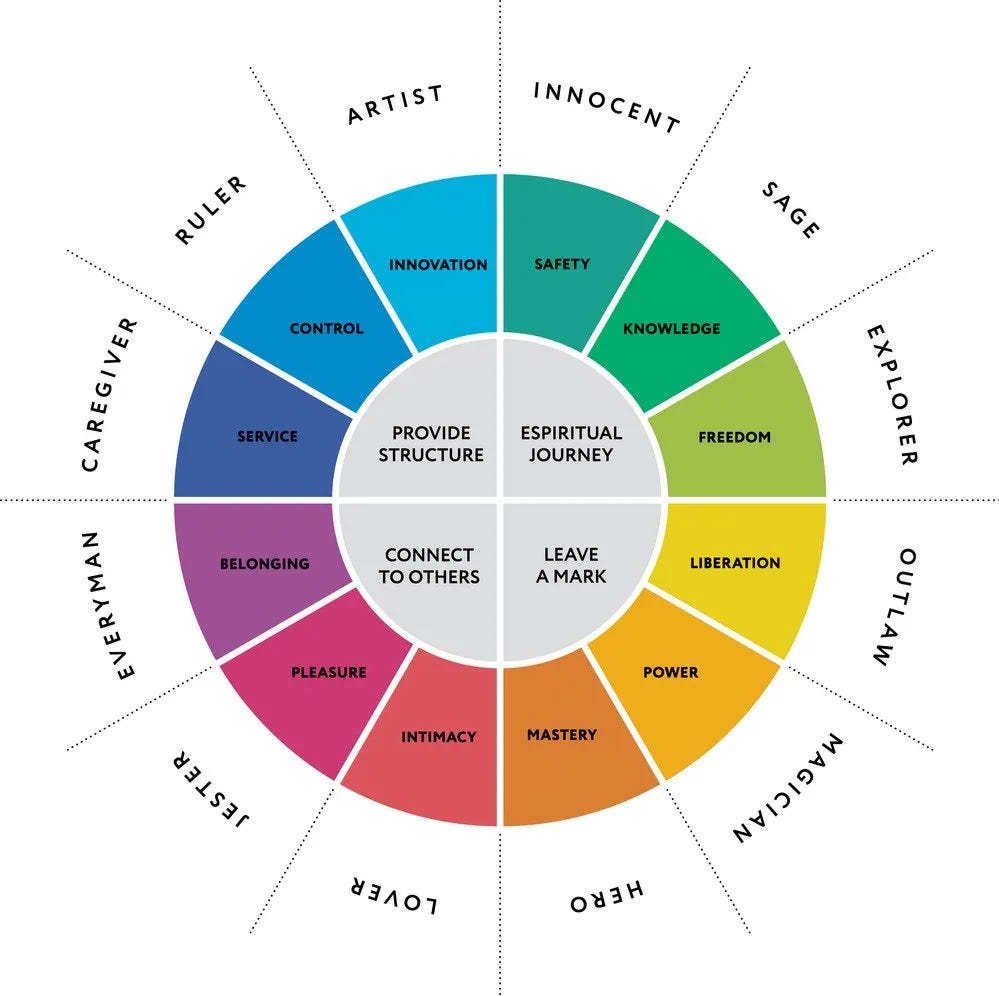
This article is a good overview of Jung’s 12 archetypes
‘Embarking on a journey through the realm of Jungian archetypes is akin to embarking on an odyssey into the depths of the collective unconscious — a realm where ancient wisdom intertwines with modern understanding and where myths, symbols, and dreams converge to illuminate the hidden corners of our minds (Pearson, 1991).
Through the lens of transpersonal psychology, we come to recognize that within each individual resides a myriad of archetypal forces, shaping our thoughts, emotions, and behaviors in ways both subtle and profound (Corr & Matthews, 2009).’
Of course, there is no understanding of Jungian archetypes without exploring his approach to the human psyche which wasn’t just conscious and personal unconscious, but a collective unconscious.
At least as important is knowing that Jung considered 4 main archetypes to be ‘pillars, shaping the very essence of personality.’
The first is the self, which by its description of not being bound to one person like the ego and holding deepest wisdom sounds to me like what is often referred to as the True Self in the contemplative tradition.
This is one man’s take on Thomas Merton’s approach to True Self. I find this article/interview fascinating for a number of reasons, including my preoccupation with Thomas Merton and that he is approaching it from the perspective of Chinese culture, which is much less familiar to me.
The persona - while the masks we wear feel essential to our survival and self-protection as we grow up and seek to navigate the world, they come to form the false self, a barrier to growth into the True Self. Billy Joel talked about this decades ago in his song, The Stranger:
The Shadow - there are many approaches to Shadow Work of course, but I have found looking at the shadow qualities of the archetypes that most resonate for me has been helpful lately.
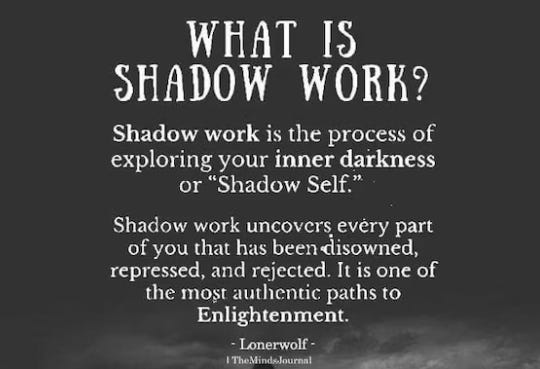
(Image came from this blog - a personal informal take)
Anima and Animus
Not finding the information in the article linked to the image source useful, I turned to this recent article on anima and animus. Besides all the usual limitations of generalizations about men and women, masculine and feminine, now that we understand gender is a social construct, where does an old concept tied to the binary fit?
Food for thought.