Knowing
What do I know? How do I know it? Intuition, magic realism, practicalities.

Last night as my husband and I rewatched an episode of Shetland, a show we both enjoy very much but are currently struggling to watch often as the series we are in deals with people trafficking, Cassie was teasing her dad about the copy of One Hundred Years of Solitude she found on his desk. “I didn’t know you were into magic realism,” she said with a little smile to the fiercely pragmatic detective.
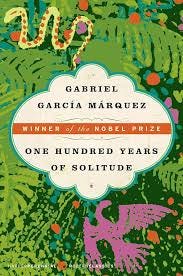
Apparently the words ‘magic realism’ sunk deep into my mind because a fair bit of my troubled dreams about Robert and I, along with a terrified populace, fleeing an inexorable invading army, involved magic. Different ways we evaded capture were through various forms of magic, shape-shifting, etc.

Then just before I started to write this, I glanced at this quote by Pavlov:
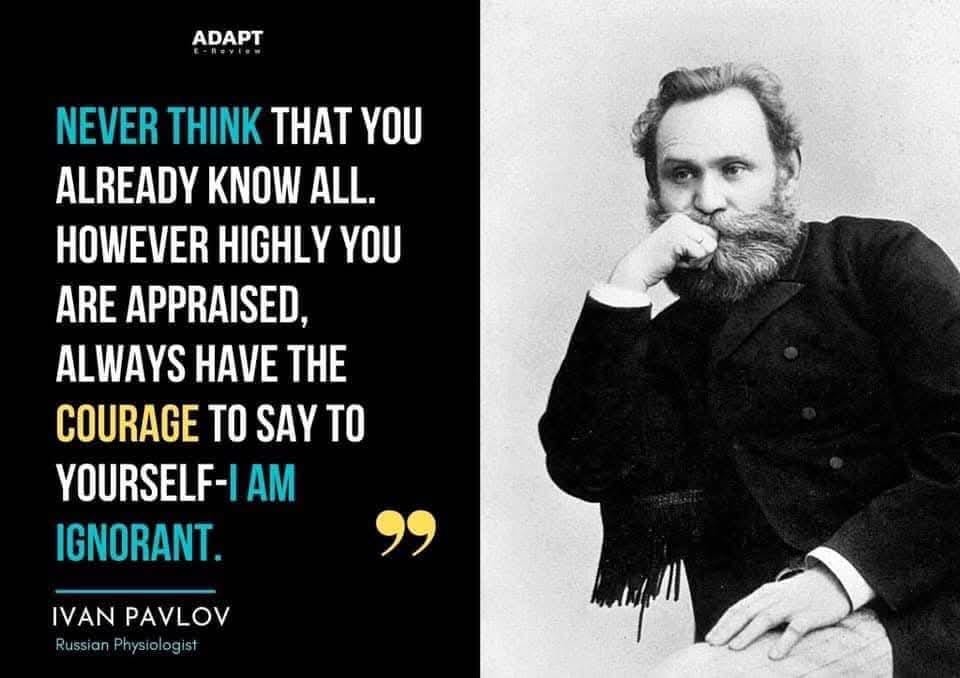
I remember being in my early 20s and being roundly made fun of by a church friend for being at that time apparently incapable of saying “I don’t know” about anything. It was embarrassing to me but certainly true. Later I understood better how I got that way, growing up as the youngest of three girls, in a family of 4 people including my mom, all of whom were apparently so much smarter than I was, because they were 5, 7, and 32 years older than me, so ignorance became a very sore point.

The truth is, of course, there isn’t a human who lives on the planet who knows very much at all, as brainy as they might appear.

Not only do we live on a relatively tiny and insignificant planet in a vast universe, but even what we can see of that universe is extremely limited, because of things like dark matter and the very small range of light wavelengths the human eye can perceive, to name only two factors.

In fact, the question of how humans come to know anything is an extremely complex one.
Epistemology is “the philosophical study of the nature, origin, and limits of human knowledge… and … is sometimes referred to as the theory of knowledge.”
The Brittanica article of course approaches the topic primarily from the Western philosophical mindset, which is inherently already only a subset of the (relatively) tiny sum of human knowledge. But I suppose one has to begin somewhere.
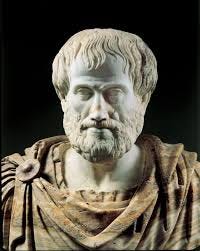
Aristotle said that ‘philosophy begins in a kind of wonder or puzzlement.’
The Brittanica article referenced above on epistemology cites the epistemological problem related to what I have already mentioned, that our knowledge of the universe is reliant on our senses, so how do we know about anything that falls outside of sensory experience? There is also what is called the other minds problem, that no one can know what goes on in another person’s mind, and what the relationship between how I perceive the world is with how you perceive the world. Do I see blue the way you do? In fact one can go down a whole rabbit hole about whether the ancients even saw blue, but that’s a long story.

Is knowledge mental or non-mental? Occasional or dispositional? A priori or a posteriori? Necessary or contigent? Analytic or synthetic? Tautological or … and so it goes on and on. Again, these are just Western philosophical approachs.
Eastern philosophy has taken extremely different approaches over the millenia including the non dual or Advaita approach described by Rupert Spira in his SAND talk from 10 years ago, Love is a Place. I wrote my Substack post about that on November 2. So the issue here is whether the usual Western approach to knowledge and the universe is inherently flawed and materialistic because it posits the priority of matter, while the Advaita approach is to see it from the perspective of unified Awareness/Consciousness.

A story which may or may not be apocryphal about the famous Swiss born theologian of the 20th century, Karl Barth, is that when he was asked to sum up the most important theological knowledge (or something, the question is stated in very different ways depending on the source), he replied, “Jesus loves me, this I know, for the Bible tells me so.”
And I have already referred in a previous Substack post to the Anglican approach of Scripture, tradition, and reason, so, I suppose the “Jesus loves me” quote could be related in some way to all three…
It does seem to lean more to an intuitive approach, though.
Intuition, according to this Brittanica article, is “the power of obtaining knowledge that cannot be acquired either by inference or observation, by reason or experience. As such, intuition is thought of as an original, independent source of knowledge, since it is designed to account for just those kinds of knowledge that other sources do not provide. Knowledge of necessary truths and of moral principles is sometimes explained in this way.”

As an ENFJ in Myers Briggs typology, I have at the top of my stack, as we MBTI nerds say, Extroverted Feeling and Introverted Intuition. So I spend a lot of time tuning into how people around me are feeling to decide how I am going to proceed. The introverted intuition helps me process these and other data to get impressions and ideas of what is really happening (according to me anyway), understanding the patterns, and listening to what is being said behind the words.
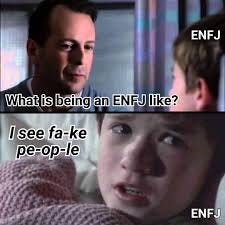
For example, I spent a fair chunk of the time I was unable to fall asleep last night trying to understand imaginatively how a friend sees their immediate work and friend circle. Such an ENFJ thing to try. Was I accurate? Perhaps, but how would I know, apart from asking the friend, something ENFJs usually try to avoid at all costs, lest we cause emotional distress?
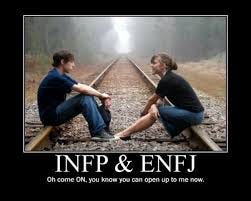
(The request to open up is really just going on inside the ENFJ’s head. We are not usually saying it out loud to our partners and closest friends, who are very often INFPs, INFJs, ISTPs, ISFPs… yes, you got it, they are usually introverts)
So… what do I know? How do I know it?
I can spin tons of theories for you, but the older I get, the more deeply I understand how truly little I understand.