Attachment. Love?
As I meditate, I hear the steady breathing of my cat Loki on the armchair beside me. He is approaching the latter years of his life at the venerable age of 90 in cat years. Is attachment love?


It is human to become attached. Deeply, illogically, and to an extent that when we inevitably lose the animal or person to which or to whom we are attached, through death or other means, it can be devastating.
Is it love?
It can be. I like to think I genuinely love my cat. He came to us in 2011 as a starveling kitten. Just walked in through the back door and into our hearts. My youngest was the most wholly and fiercely attached at first. They were together in their room most of the time they were at home, waking or sleeping. Then they moved back to Montreal to study and live and by the first time they returned for a visit, it was over. For Loki anyway. Very hurtful for my youngest, but cats can be like that. They don’t see you for a while? You no longer exist for them. By then he was very attached to me and my husband, though primarily to my husband who gives him way more treats and catnip…
7 Types of Love?
This PT article divides love into seven types.

Eros or romantic love: something that happens to us. We fall in love. Madly, passionately, and sometimes irrevocably. Often though we fall out of love. So while attachment can and does happen through eros, it can shatter too.

Philia, friendship love: this can easily begin very suddenly like eros. I have met people more times than I can count where there was an instant affinity. Kindred spirits, L.M. Montgomery called it in her Anne of Green Gables. Two of those friendships that started like that in the 1980s are still there for me, and that’s beautiful. Have we been through ups and downs over the past 40 plus years? You’d better believe it. Months or years passed when one had been hurt by the other and was silent or there was a gap for a plethora of other reasons. And again, like eros, philia can be severed by death or whatever. I will likely never again talk to dozens of people I once considered close friends over the past 55 ish years of my life that I remember. So attachment definitely happens in this realm of love, whether it persists or ends.

Storge, family love: love can start as eros or philia and become storge as lovers or friends become found family. But usually storge is just there, for the whole time your parents or children or cousins or other family members are in the world with you. Storge is complicated within a highly dysfunctional and/or distant family. I have a sister who might never talk to me again besides perfunctory birthday emails. It’s been almost four years of that, this time. My other sister and I rarely talk or feel much attached. My mom is going deeper in dementia and doesn’t always know who I am. And so on. But I love my aunts and uncle, and cousins, and we have had some profound and heartfelt times together over our lives, perhaps especially last year. So definitely attachment can be a part of this realm, but it can also break completely before death.

Agape, unconditional love: I am going to veer here from most of what was said in the PT article because I have never understood agape as ‘altruism’ (whatever that really means or whether it exists) but rather unconditional love. This is difficult for humans but part of parental love can be unconditional, in a healthy parent-child relationship. I don’t merely love my children for being my children but for the beautiful and unique people they are and nothing can change that love, even were any of them to wholly cut me off for the rest of my life. I would still love them and want the very best for them. I feel that way to some extent for other family members including my husband as well as my closest friends. But my understanding of the love God has for me and all of God’s creation is that it is fully unconditional in a way I cannot approximate in the most ideal relationship I could have or even imagine. Human love will always be mixed in with one or more of the above three and/or the below three, and that’s terrific. That’s being human. Attachment plays a significant part of how humans experience agape but there is often an inherent asymmetry in both this love and how the attachment works.

Ludus, playful love: again, not a fan of how this is described in the article. Sure, ludus can be closely linked to eros and/or philia. But for me, at its best, it is truly playful and mutual, and attachment could be an aspect of it, in a healthy philia or storge or even agape context. I have experienced ludus in the context of healthy eros as well. I don’t believe that playfulness means an unwillingness to commit. I think that decision to keep it casual is for other reasons. But I could be wrong of course.

Pragma, practical love: the writer of the article references arranged marriages here. It could be a feature, but whether a marriage begins in romantic love or by arrangement, pragma must come into play over time as two usually very different people find routines, strategies, and a common lifestyle together over years, perhaps decades. A couple was mentioned at church who had been married 73 years before one of them died recently. Imagine! And yes, of course, pragma can coexist with any of the other loves, and attachment tends to play a significant role.

Philautia, self-love: there are really good reasons why the Golden Rule in its various forms is found in societies and cultures around the world, and why the part “as you love yourself” is in there. Humans cannot actually love others without a significant amount of self-love. In healthy relationships, any and perhaps all of the other 6 loves flow out of a healthy self-love. Unhealthy “self-love” isn’t even really love of self, but rather a personality disorder, like narcissism, or some other dysfunction. Humans cannot even function without a basic self-love and self-nurture - ensuring we eat as well as possible, hydrate as well as we can, exercise to stay healthy and balanced, rest when and as much as we need, and heal physically, emotionally, and spiritually, as needed. As the saying goes:
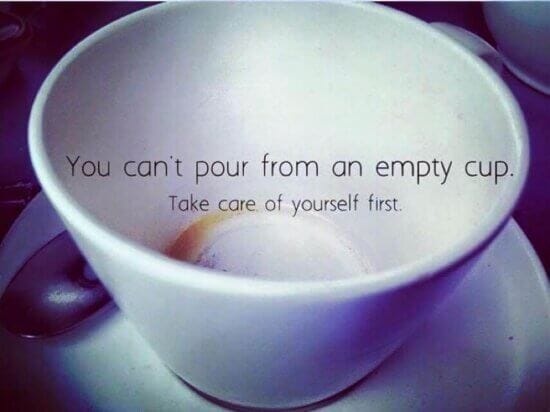
I noticed with a sad smile as I searched for the above image some evangelical blog which I will not link beating women about the head and ears for listening to popular advice about self-nurture because it is not ‘godly’ or ‘scriptural’. Pfft. Grateful for not being in those circles anymore but grieving for those still trapped in ‘communities’ that demand total allegiance to the exclusion of one’s personal needs.
With self-love, as well, attachment plays a significant role, but in a different sense than with the other loves, as we are not here attaching to someone outside ourself.
More than 7 Loves?
I’m quite sure there are more than seven types of healthy love, but it’s a good start anyway, and it’s been an interesting exploration for me this morning to think about how attachment interacts with them all. I hope you’ve enjoyed the journey too.