11/40: Being As Is
One form of suffering that can be difficult to let go of is the longing for self-improvement, especially at this time of year. Embracing 'as is'

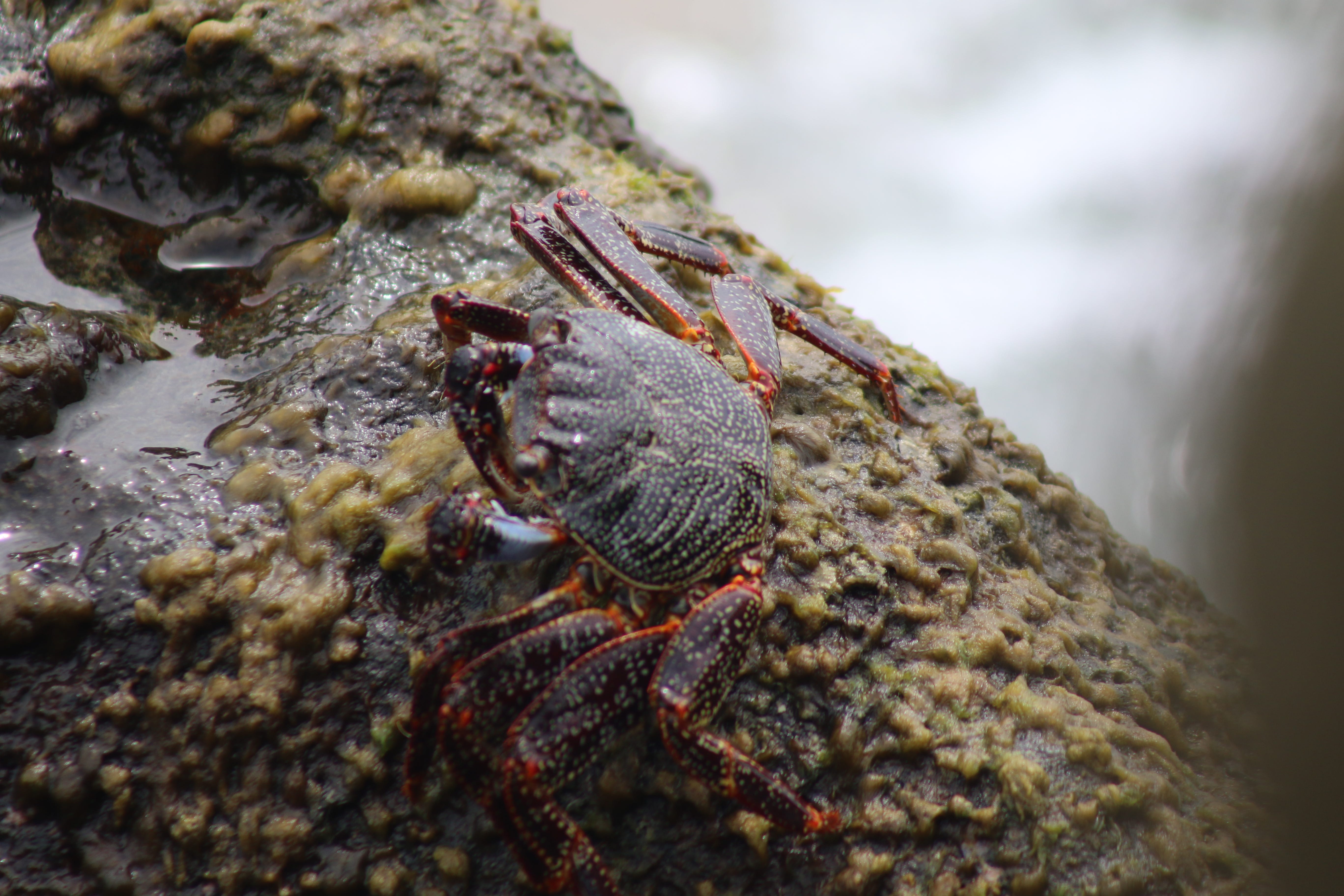
Tobago February 2026. Photo credit: Robert Pental
Canon Ian, in his sermon yesterday at the Cathedral, remarked wryly how prevalent the energy of self-improvement is just about everywhere on social media these days. It is after all still relatively early in year and so of course many of us are busy trying to re-invent ourselves, to imagine and be a new and better version than the previous year’s.
I had to ask myself hearing him say that whether this personal 40 day practice I have created for myself is just another self-improvement project. It is undeniable that I am like billions of other humans susceptible to the lure of becoming an upgraded version of myself and that at least part of what I am focusing on here is a kind of shinier me.
I hope, though, that I am actually feeling drawn to something else. Letting go of encumbrances or things that impede to allow that which essentially is, in other words, the True Self, be, in its simplicity and truth.
The picture above, the little crab on the shore of Buccoo Bay that my husband captured (along with hundreds of other images which I now have gleefully downloaded to my Google drive), isn’t very pretty. It has funny little knobs on its carapace, all those legs, and googly eyes. But it is exactly as it is, on a rock, just being itself, unlike humans constantly fussing with unruly hair, dry skin, or clothes that don’t do what they are supposed to.
As Is
Last week was my husband’s birthday. He adores old analogue watches and clocks, so I stopped off at the pawn shop and secured a battered wall clock for him that seemed to strike the hour properly. The trouble was that by the time I got it home, a delicate piece of the mechanism had snapped and it no longer kept time at all, never mind struck the hour. But as my husband rightly pointed out, I had bought it as is, and there was nothing to be done.
As is! Those dreaded words to the would-be canny shopper who knows that there could easily be some hidden flaw or vulnerability as in this case, a pendulum connected to the mechanism by a tiny frail bit of metal which snapped as I walked home with the clock.
Most of my life has been spent fighting my as is. I was the youngest of the family, so by far the least informed, the most in the dark about the simplest things. I would see a superior sneer on the face of one of my sisters as I said another childishly ignorant thing, and my heart would sink. Looking in the mirror, I understood that I would never be beautiful. I wasn’t very heavy before I had kids, but with every child, a few more pounds were added, never to be subtracted, and the forties and fifties only packed more on. And then Covid hit and my inactivity meant too much more weight.
Part of my change of heart at 60 has been increasingly embracing who I am while noting that a lot of aspects of how I am in the world that have accrued aren’t necessarily an essential part of my Self, but rather various defenses and strategies my parts have created to protect that Self from a world that seems hostile.
So perhaps approaching things from the point of view of letting go might be different from the usual self-improvement projects of the false self. Whether it is one or the other has to do with subtle aspects of attitude and what it feels like on the inside. It can easily veer to trying to better myself rather than simply sinking more deeply into who I am, as I am.
Just As I Am
No one who has spent time in the world of evangelical Christianity has been able to avoid the altar call experience. Probably if you have inhabited those spaces, you have participated in many altar calls, a fair number of them to the tune of Just As I Am.
But do you know the story behind the hymn? I didn’t. But I know a little more having looked it up on Hymnary.com.
The writer, Charlotte Elliott, was 32 in the early part of the 19th century when she became an invalid after a serious illness. She felt inadequate in her life but was invited by an evangelist to come to God as she was. A dozen years after that pivotal moment, after a night of anguish, distress, and feelings of utter uselessness, she wrote this hymn as a way to tell herself the story of her faith and journey.
Charlotte wrote 150 hymns, published, among other places, in her Invalid’s Hymn Book. She lived for 50 years in chronic pain and illness and was often depressed, but this one hymn was translated into a wide variety of European languages as well as many other tongues, has been sung and heard by countless millions, and nearly 200 years later remains beloved by many.
Why is it that on the very day it was first written, her sister-in-law read it, immediately asked for a copy, and began to be share it with others? Charlotte in her illness, isolation, and sense of personal poverty had managed to capture a commonality such that her hymn took wing from the start.
This experience of feeling utterly alone and without sufficient merit and yet welcomed into Presence is so human, completely universal in nature.
Mary Oliver in her poem Wild Geese offered something that feels like a secular response to a religious sense of unworthiness:
You do not have to be good.
You do not have to walk on your knees
for a hundred miles through the desert repenting.
You only have to let the soft animal of your body
love what it loves.
Tell me about despair, yours, and I will tell you mine.
Meanwhile the world goes on.
Meanwhile the sun and the clear pebbles of the rain
are moving across the landscapes,
over the prairies and the deep trees,
the mountains and the rivers.
Meanwhile the wild geese, high in the clean blue air,
are heading home again.
Whoever you are, no matter how lonely,
the world offers itself to your imagination,
calls to you like the wild geese, harsh and exciting -
over and over announcing your place
in the family of things.
You might, I might, be the equivalent of a lowly crab on the rocks, rather than a striking, elegant heron.
You and I both have ‘a place in the family of things’.
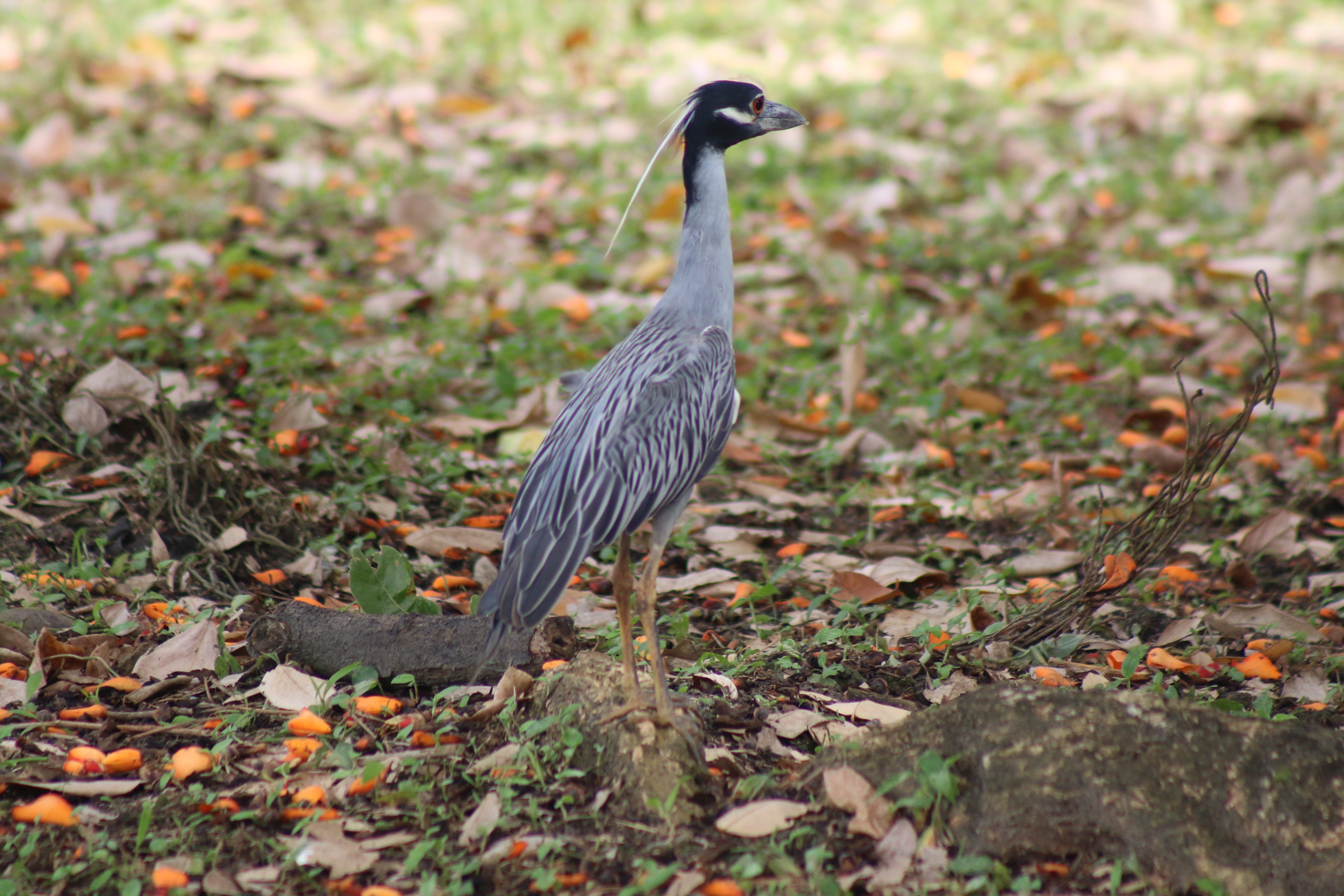
Tobago February 2026, by Robert Pental